

Pathfinder: Wrath of the Righteous review
Our Verdict
Wrath of the Righteous is a beautiful love letter to tabletop RPGs that faithfully evokes the thrill of sitting down to play through an epic adventure.
For
- Great hybrid real-time/turn-based combat
- Gorgeous art design with charming, colorful landscapes
- Excellent adaptation of the Pathfinder tabletop RPG
- Effective tutorials
Against
- Writing can exist bland and dull
- Cause army combat gets boring fast
Tom's Guide Verdict
Wrath of the Righteous is a cute beloved letter to tabletop RPGs that faithfully evokes the thrill of sitting downwardly to play through an epic adventure.
Pros
- +
Great hybrid real-fourth dimension/turn-based combat
- +
Gorgeous art design with mannerly, colorful landscapes
- +
Excellent adaptation of the Pathfinder tabletop RPG
- +
Effective tutorials
Cons
- -
Writing tin can be bland and dull
- -
Crusade army combat gets boring fast
Pathfinder: Wrath of the Righteous review: Specs
Platforms: PC
Price: $l
Release Date: September 2, 2021
Genre: Isometric RPG
Pathfinder: Wrath of the Righteous is Owlcat Games' newest isometric RPG, set in the universe of Paizo'due south Pathfinder tabletop RPG. A follow-up to Owlcat'southward first game, Pathfinder: Kingmaker, Wrath of the Righteous aims to deliver the experience of playing through an epic tabletop campaign without the hassle of having to go all your friends onboard and around a tabular array (or a Zoom call) every week.
The game succeeds, for the well-nigh office, and that's probably all you demand to know if yous're already a Pathfinder fan. At its best, Wrath of the Righteous faithfully evokes the thrill of sitting downwardly to play through a Pathfinder adventure, except the game does most of the work for yous, and looks skillful doing it. At its worst, it frustrates you lot with dull writing, irksome gainsay and buggy behavior.
The bugs will probably get squashed over fourth dimension, given Owlcat's track tape of patching and updating Kingmaker, which is a significantly meliorate game now than it was in 2018. Only are the other weaknesses in Wrath of the Righteous enough to spoil the experience? I don't think so, and hopefully this review will aid you lot understand why.
Pathfinder: Wrath of the Righteous review: Gameplay
The team at Owlcat is upfront virtually taking inspiration from other isometric RPG serial, from Baldur'due south Gate to Pillars of Eternity. If yous're familiar with those games, you should experience right at abode playing Wrath of the Righteous. The game gives you a bird's-eye view of a 6-character party and challenges yous to run into them through the ups and downs of a good, one-time-fashioned crusade.
I do wish you could pull the view back a bit further, though. The 3D photographic camera system in Wrath of the Righteous lets yous spin your viewpoint around in a full circle, and yous tin zoom in or out a reasonable amount. But pulling out every bit far equally possible notwithstanding leaves the view feeling a bit more than cramped than I'd like. I found myself constantly moving the photographic camera effectually to watch the path ahead, less for potential threats than to simply see where to click adjacent. I wanted a better sense of the globe and my characters' place in information technology.
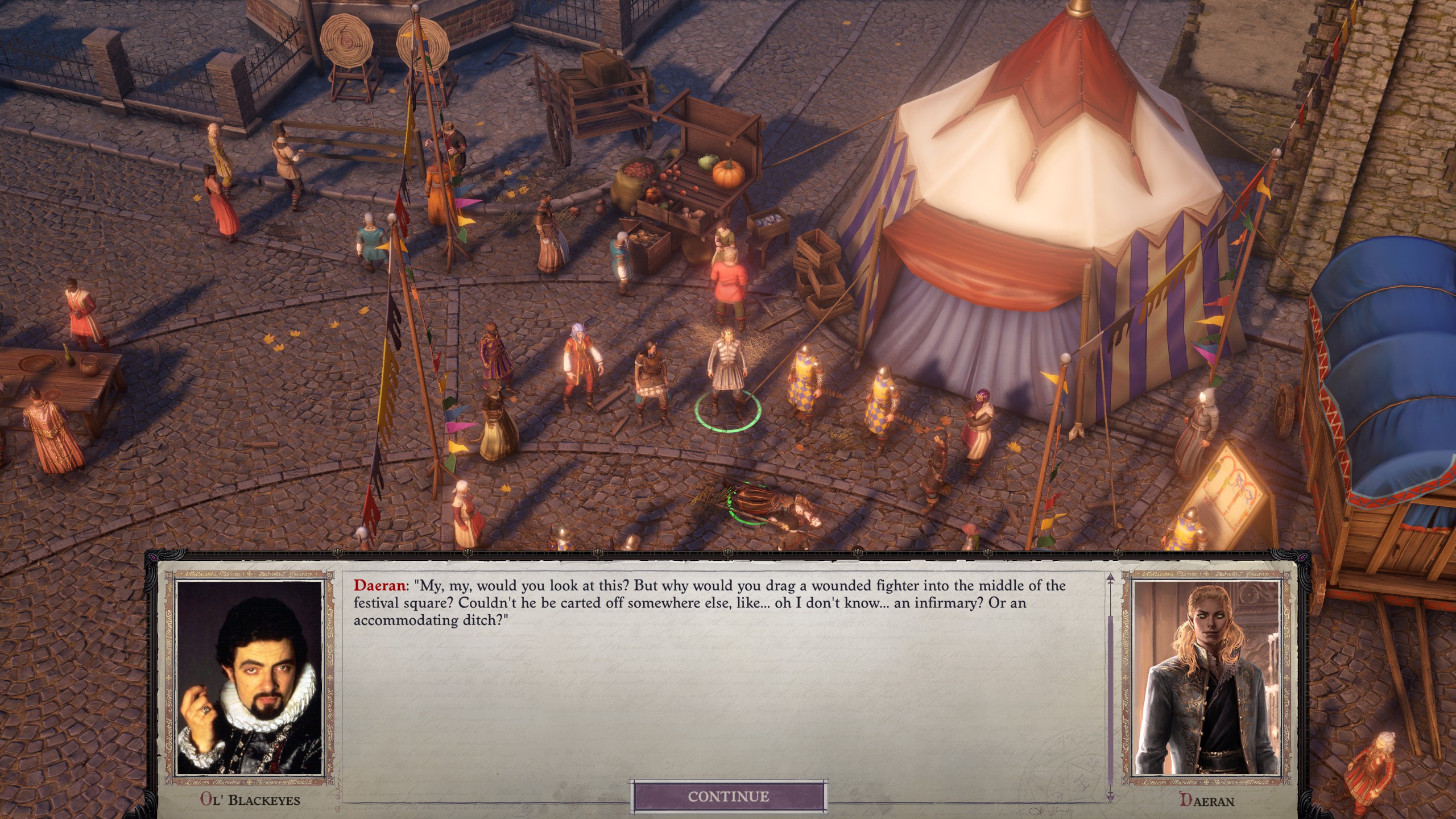
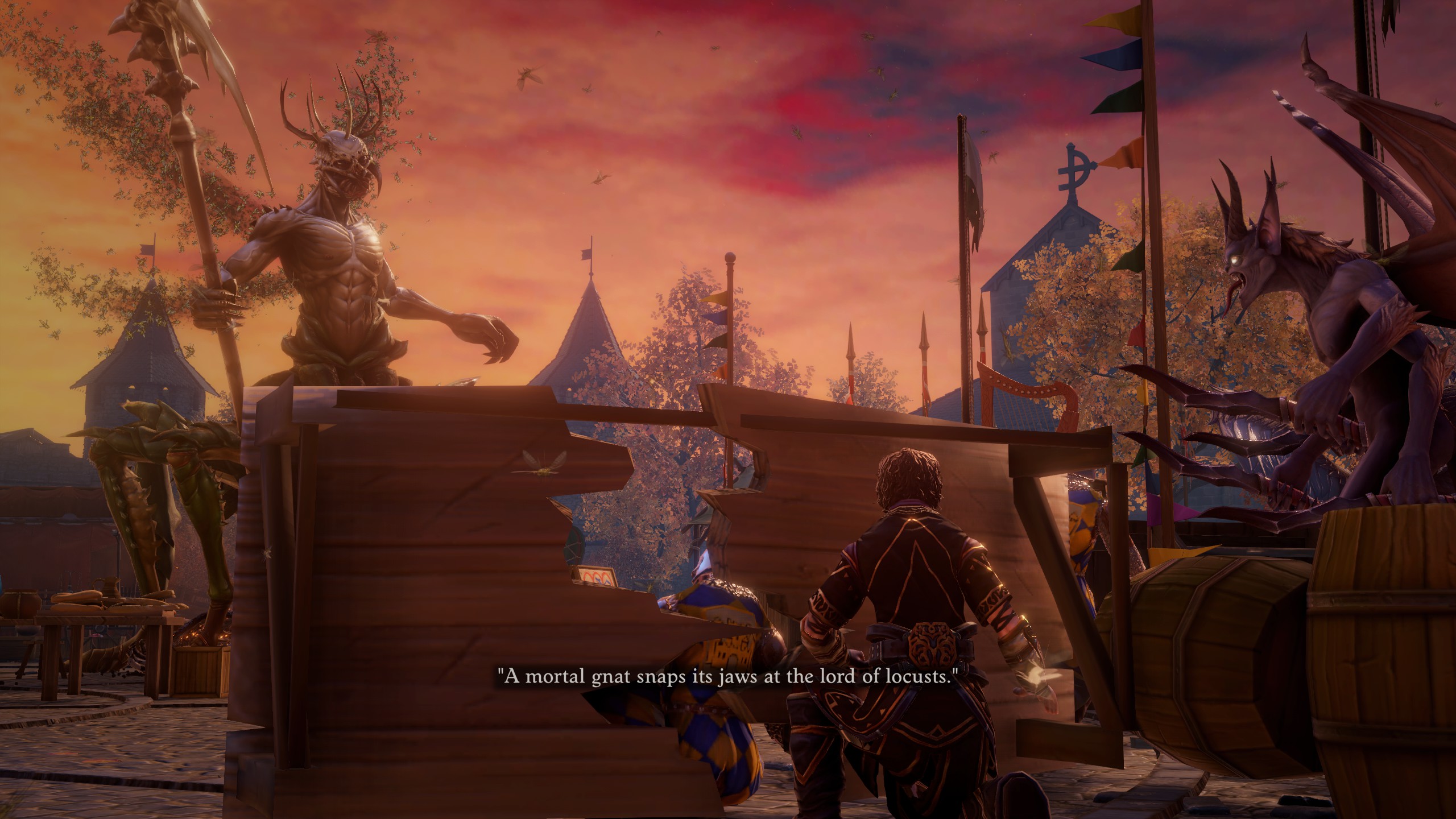
Early, y'all'll spend the lion's share of your time guiding the protagonist you've created (or picked from a list of pre-generated characters) through the streets of Kenabres, a fortified city at the edge of a big ol' demon-infested region dubbed the Worldwound. You'll meet a host of interesting characters and creatures adapted from the pages of Pathfinder'southward Wrath of the Righteous tabletop adventure entrada, many of whom y'all'll end upwardly cutting downwardly in either real-fourth dimension or turn-based combat.
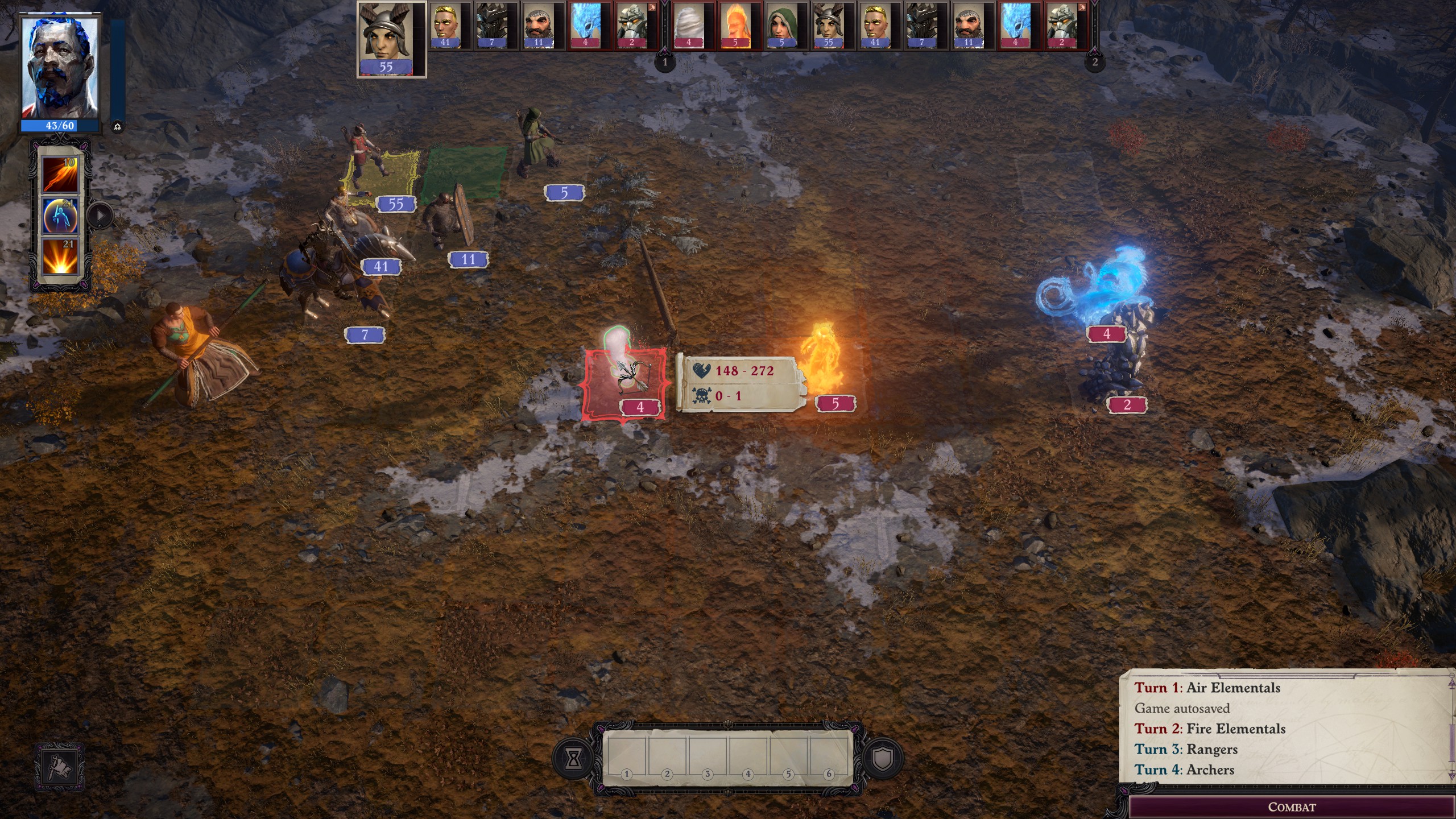
This is a pregnant change from Kingmaker, which had only real-fourth dimension gainsay (with pausing), until a fan modded in a plough-based style. The team at Owlcat reached out to the modernistic maker and referenced their work while designing Wrath of the Righteous. The result is that you can bandy between real-time and turn-based combat pretty seamlessly while playing.
I dearest this feature, considering information technology lets you tailor how much you want to exist involved in combat. On Normal difficulty (which I played on for this review), you tin can pretty reliably sic your political party on nearly enemies and sentinel the combat play out in real fourth dimension, pausing occasionally to issue a specific order. Just when you face off confronting challenging opponents, which need careful resource direction or complicated strategies, yous tin switch over to turn-based manner and micromanage your characters' actions.
Obsidian offered a like choice between existent-time and turn-based combat in its 2018 isometric RPG Pillars of Eternity II: Deadfire. Notwithstanding, in that game, you had to cull when starting a new game, and couldn't switch back and forth on the wing. At present that Wrath of the Righteous has shown me what it feels like to play a truly dynamic existent-fourth dimension/plow-based isometric RPG, I wish I never had to go back.
Pathfinder: Wrath of the Righteous review: Crusade direction
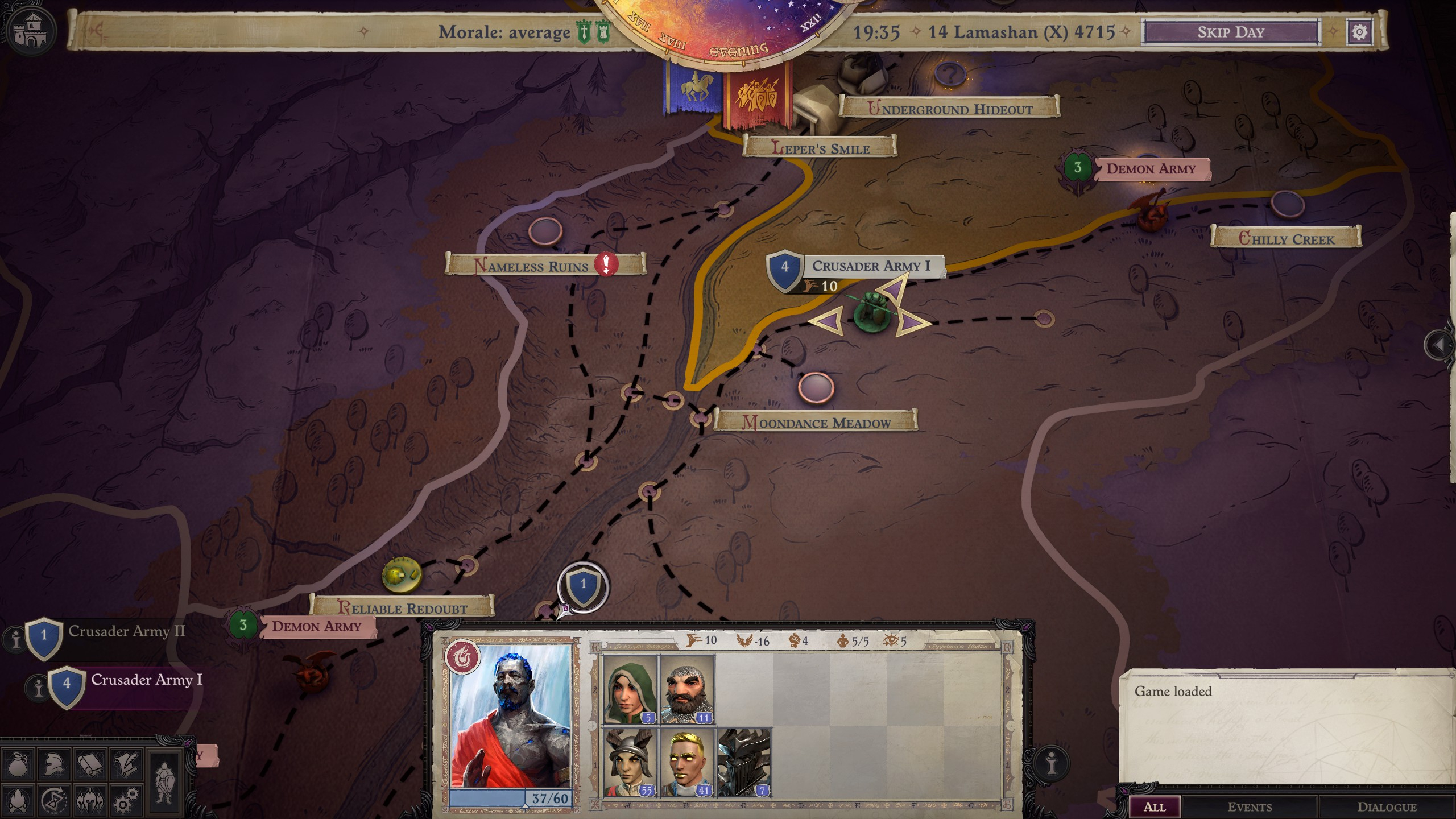
Once you progress far enough, yous'll have the take chances to leave Kenabres and get-go marching your merry band of crusaders on adventures around the surrounding territory. This takes the form of a colorful map laid out on a table, and covered with footling figurines. It'south a clear love letter to an idealized tabletop gaming feel, and quite pretty to expect at — which is nice, since yous'll spend at least a dozen hours over the course of a game staring at the map screen.
You lot'll spend much of that time managing the resource and troops of the 5th Crusade, the in-game war effort against a demonic horde. Sometimes, that involves making dialogue choices and going on side quests. Most of the time, it ways moving armies around the map and spending a divide set of Crusade-specific resources to hire troops or build structures in the areas you control. All this crusade management plays out on the same map that your adventuring party uses to move, and you can swap back and along between the two modes at volition.
Building upwards your armies and winning battles are key to progressing the story. That can be frustrating if you don't savor the ground forces combat, which requires yous and the enemy to have turns moving stacks of units effectually a grid-based battlefield. (Owlcat is upfront about this mode being an homage to the Heroes of Might & Magic series.)
Happily, if yous don't desire to bother with the crusade management stuff, you can enable an machine mode, which will leave you complimentary to focus on the adventuring part. This mode might be worth using, besides, since I think you really demand to get a kick out of the ground forces gainsay to enjoy doing it for dozens and dozens of hours. Regular army battles tin can be long, tedious, drawn-out affairs, too, though yous accept the option of motorcar-resolving them without having to play them out yourself.
I happen to love both isometric RPGs and Heroes of Might & Magic games, and so the two layers of gameplay seem approachable and enjoyable to me. But if you haven't played a game like this, you'll likely confront a steep learning bend in the early days of your cause. This is especially frustrating, because a few bad losses tin can quickly leave you without enough resources to fight finer.
Luckily, Wrath of the Righteous offers a pretty practiced set of in-game tutorials. Information technology also offers enough of difficulty levels and modifiers, which yous can modify on the fly, allowing you to dial downward the challenge whenever it gets too frustrating.
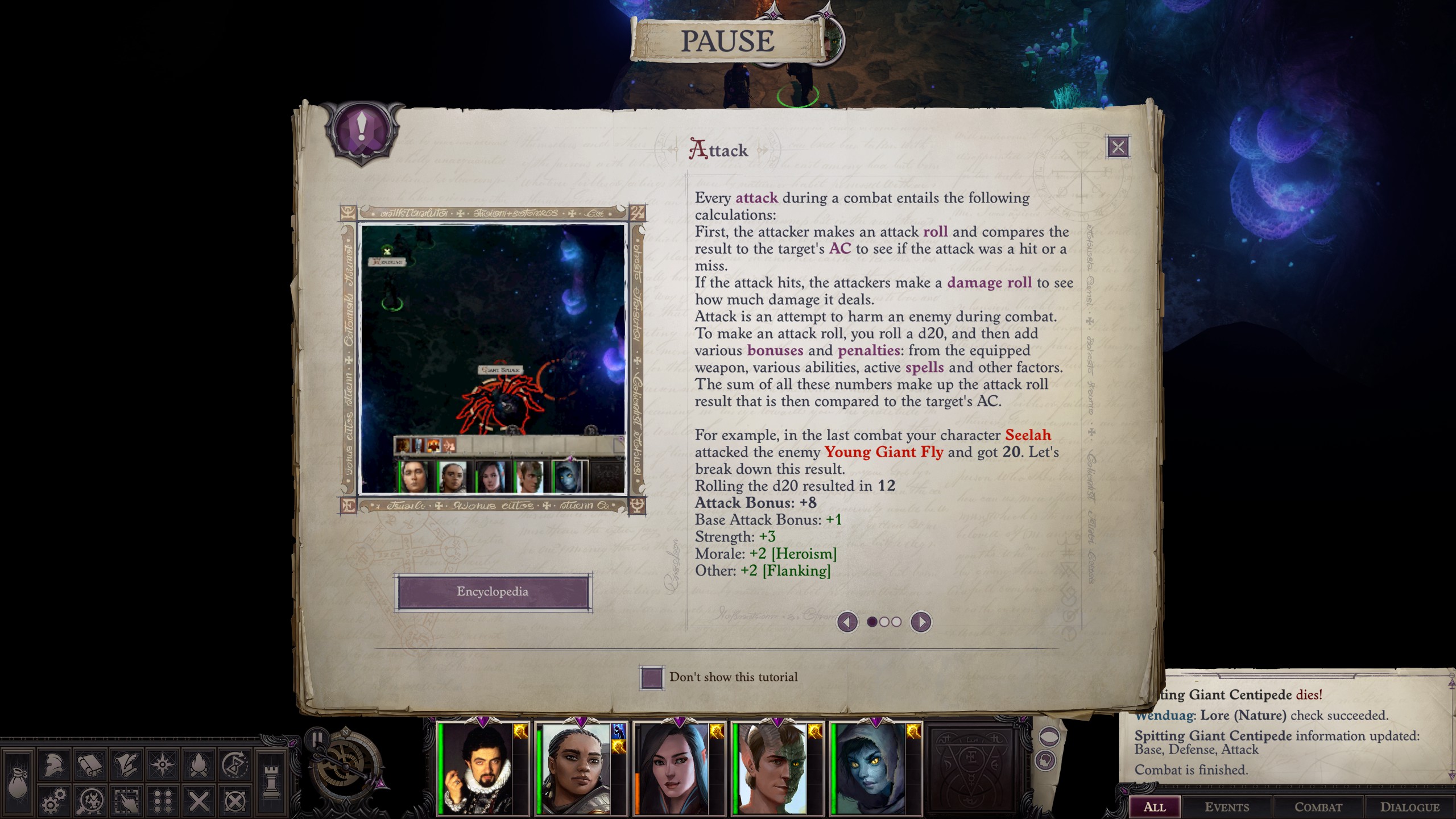
I encourage you to take advantage of this whenever you lot need to, because like the Pathfinder tabletop RPG, Wrath of the Righteous offers a nigh-overwhelming array of character races and classes to choose from. It's very like shooting fish in a barrel to put together a cool character idea on paper, but to notice that they get torn apart in particularly challenging fights. It'south meliorate to build a grapheme who offers an intriguing perspective on the story of Wrath of the Righteous, than to build the optimal demon-killing machine — unless that's the way you desire to play the game.
Pathfinder: Wrath of the Righteous review: Story
Speaking of story and characters, Wrath of the Righteous has both in ample measure out. I'm just midway through the second chapter of the game, despite putting in well over 30 hours. If the 120+ hours I put into Kingmaker is whatsoever indication, there are nevertheless hundreds of quests ahead of me.
And so far the writing has been constructive, just rarely surprising or compelling. Your protagonist meets a host of characters, many of whom first appeared in the published Pathfinder adventure path, and many of whom aren't specially interesting or memorable. The exceptions are the companions you lot can recruit to your party, who all seem to have complicated backgrounds, and side quests that you can explore or ignore as you see fit.
The companions all have their ain unique perspectives on the narrative of Wrath of the Righteous, which uses the trappings of an honest-to-goodness cause against demonkind to explore nuanced questions of good vs. evil, dearest vs. duty and police vs. chaos. Of course, as this is an isometric RPG, you will encounter your character quickly level upward and gain a host of superhuman abilities, which you can use to answer most conundrums with a swift beating. In fact, that appears to be the only way the game lets yous play a grapheme with an evil alignment: by ruthlessly murdering annihilation that crosses your path.
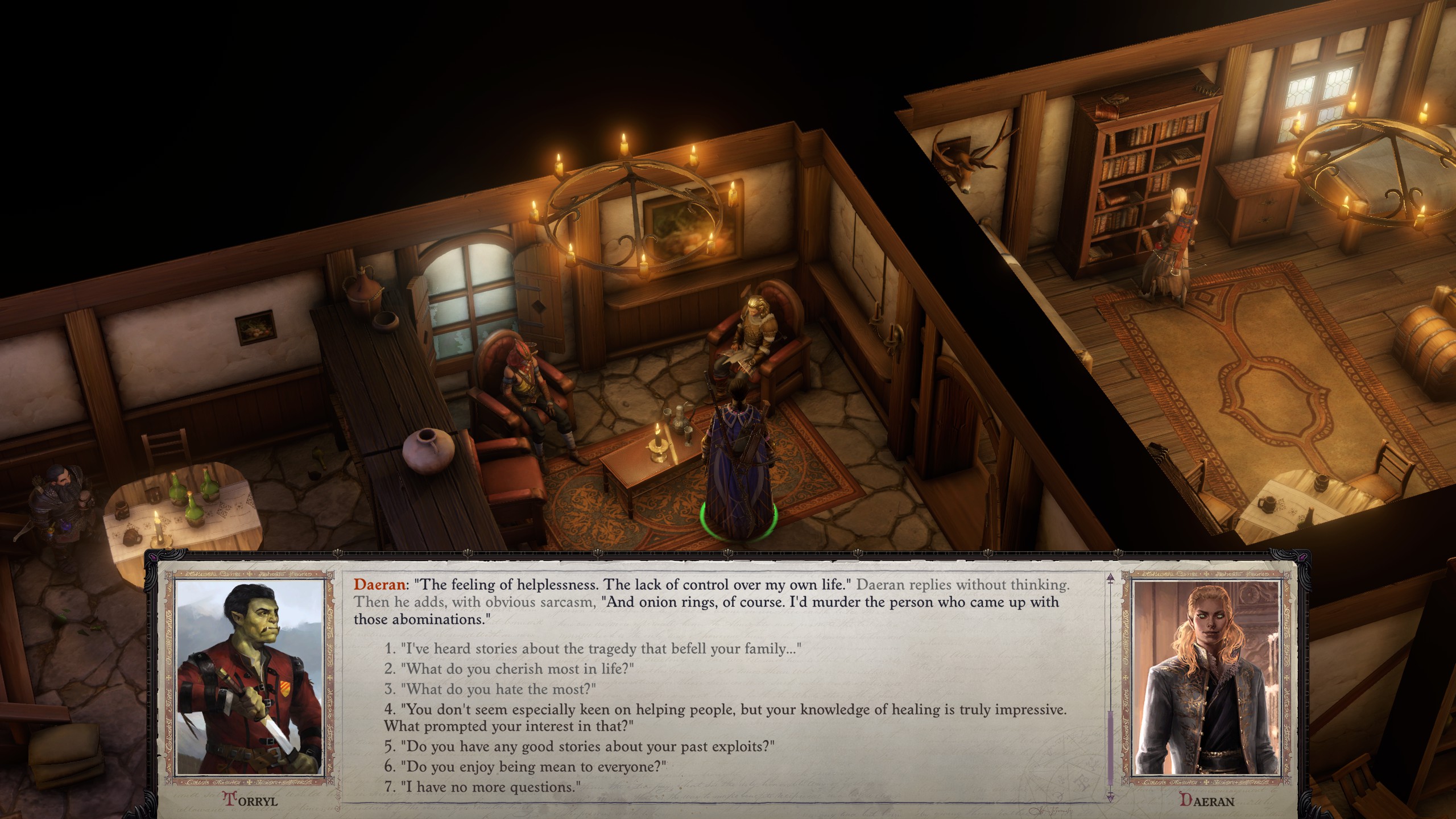
Throughout play you'll see dialogue options with indicators like [Evil] or [Lawful], and if y'all choose them, the game will record that behavior. Many games offer similar systems, and few do enough to make playing an evil character seem worthwhile, or even believable. Wrath of the Righteous has a similar problem, as I've yet to see an [Evil] choice that was more than circuitous than "kill this person correct here, right now, for little to no reason."
In fact, the writing overall has been a bit more deadening and less enthralling than I'd like. There's some proficient stuff in Wrath of the Righteous, especially when information technology comes to companion quests. A lot of the major plot beats will resound with anyone who has a soft spot for sword-and-sorcery romps. But more often than not, I discover myself fast-forwarding through dialogue, skimming conversations for the most important bits and skipping by large swathes of text that make my optics glaze over when they should be drawing me in. Information technology'due south practiced enough to get the job done, but when I think of how invested I was in similar games, such as Disco Elysium, Tyranny or Pillars of Eternity II: Deadfire, I tin can't assistance simply feel a bit put off by the sheer volume of bland text in Wrath of the Righteous.
Pathfinder: Wrath of the Righteous review: Visuals and sound
Like Kingmaker, Pathfinder: Wrath of the Righteous offers a mix of voiced and unvoiced dialogue, and then far, I've really enjoyed the performances. Nearly of the voiced dialogue sounds believable, and there are some genuinely funny lines that. It's all supported by a solid soundtrack that punctuates the activeness without distracting from it.
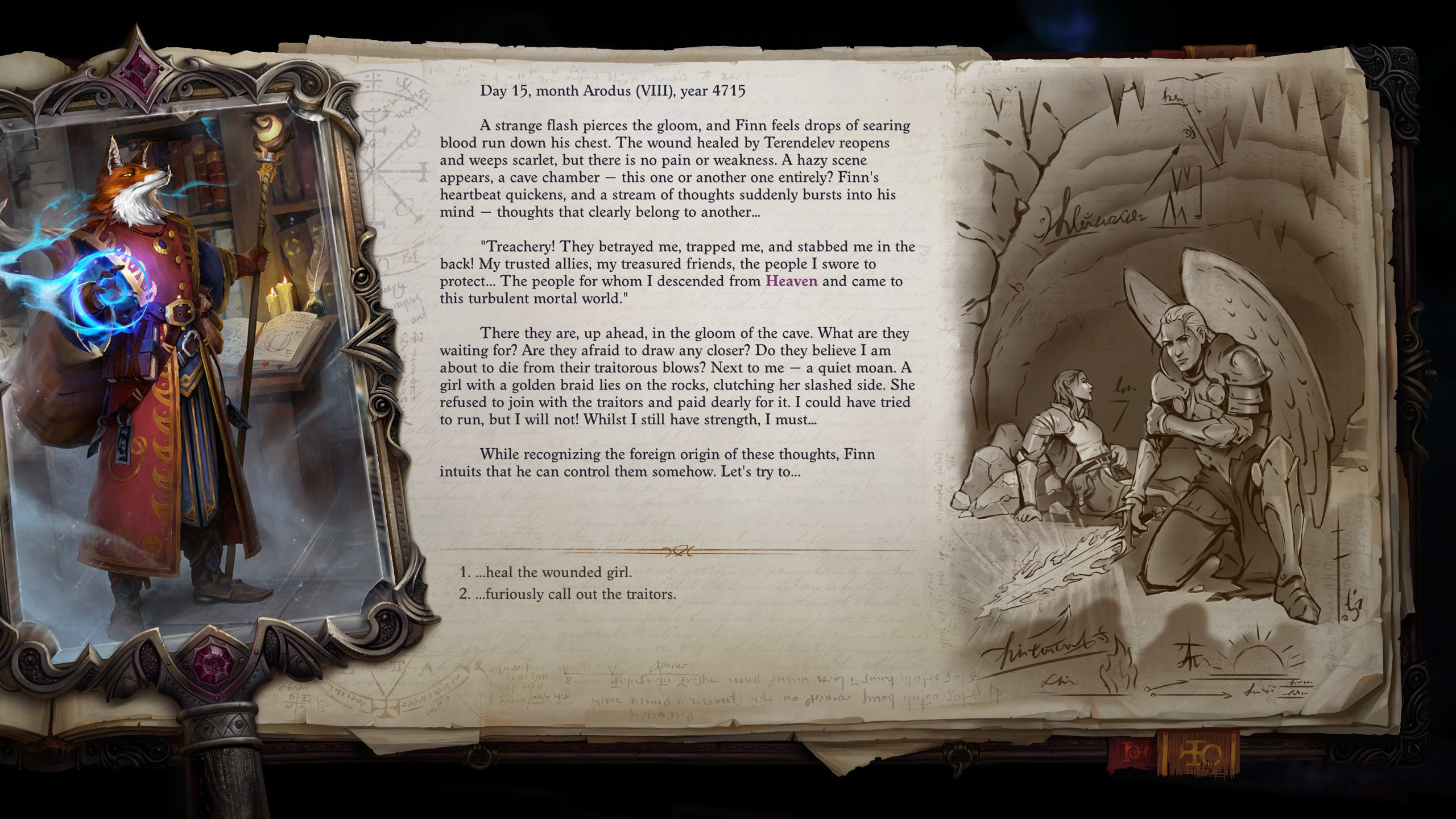
Many of the voiced characters also feature beautifully illustrated portraits, and much of the game features a similar level of detail. The graphic symbol models are a flake more realistic than those in Kingmaker, nonetheless still retain a cartoonish charm.
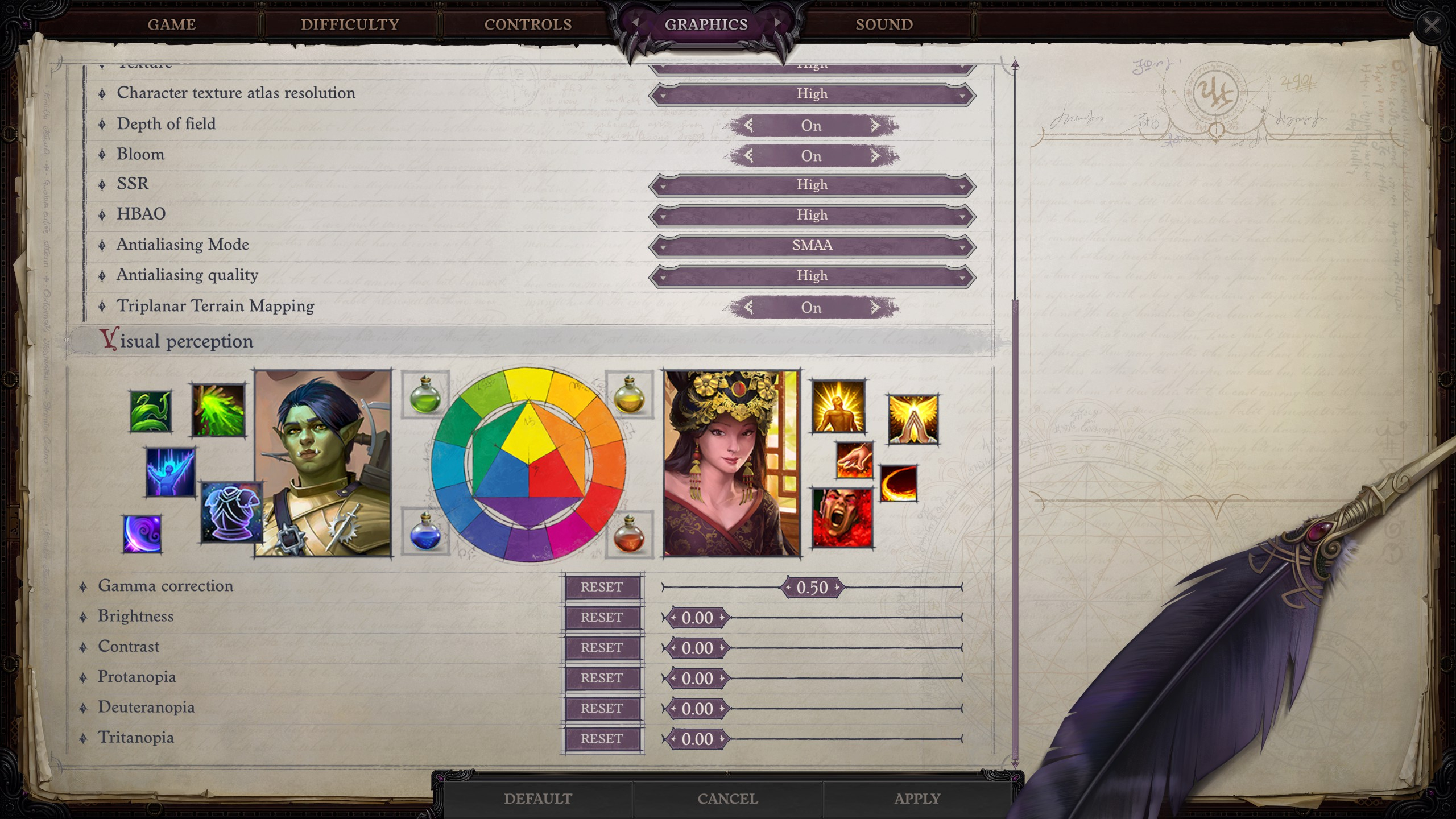
Weather and spell furnishings look hitting, and the dynamic lighting helps the diorama-like environments feel like real places. The user interface is gorgeous, with lots of rich colors and design elements which evoke the feeling of sitting downwardly effectually a tabular array to plan an epic campaign.
Pathfinder: Wrath of the Righteous review: Verdict
If the thought of rolling upwardly a character and sinking into an 80-hour fantasy RPG sounds like a skillful time, Pathfinder: Wrath of the Righteous might be simply what y'all need.
This sophomore endeavor from Owlcat Games is a beautiful love letter to tabletop RPGs: one that evokes the aforementioned blend of curiosity and excitement I felt when I played my start game of D&D. Merely similar a tabletop RPG campaign, Wrath of the Righteous can sometimes be dull and dull, with writing that tin experience a bit hollow and bland.
If you're non excited by the prospect of a loftier-fantasy isometric RPG, you might get more enjoyment out of a game similar Disco Elysium or Wasteland 3. Simply if you lot are in the mood for some old-fashioned demon-slaying activeness, Pathfinder: Wrath of the Righteous delivers it in spades, with more dragons and demon lords than you can shake a twenty-sided dice at.

Source: https://www.tomsguide.com/reviews/pathfinder-wrath-of-the-righteous-review
Posted by: fryerricated.blogspot.com
0 Response to "Pathfinder: Wrath of the Righteous review"
Post a Comment